Polvere domestica
(Domestic Dust)
2026
Espace Annex, Biel/Bienne
—
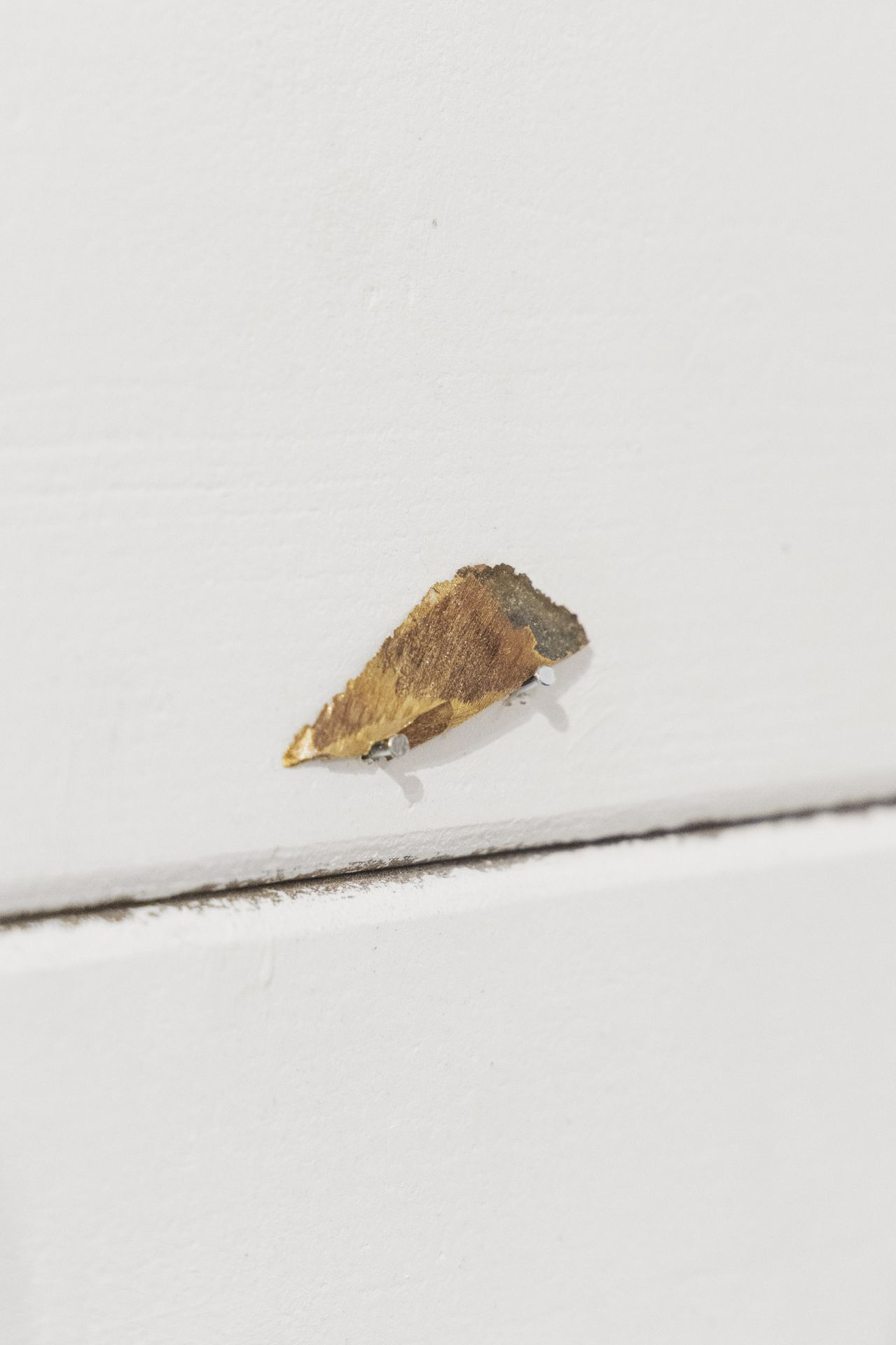
Untitled, 2025–2026
dog hair (Daisy), wood and asphalt
Untitled, 2026
metal mesh and chains
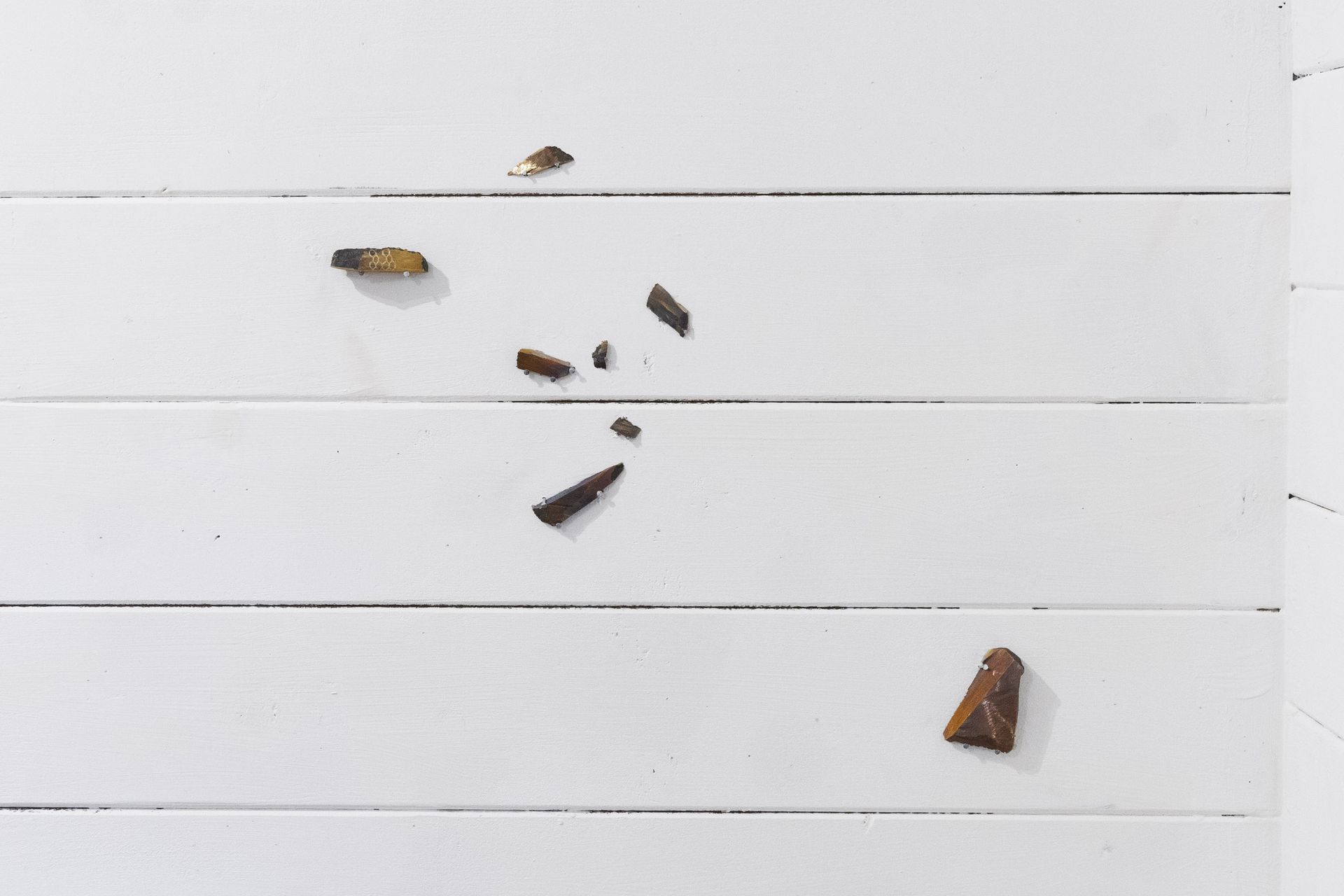
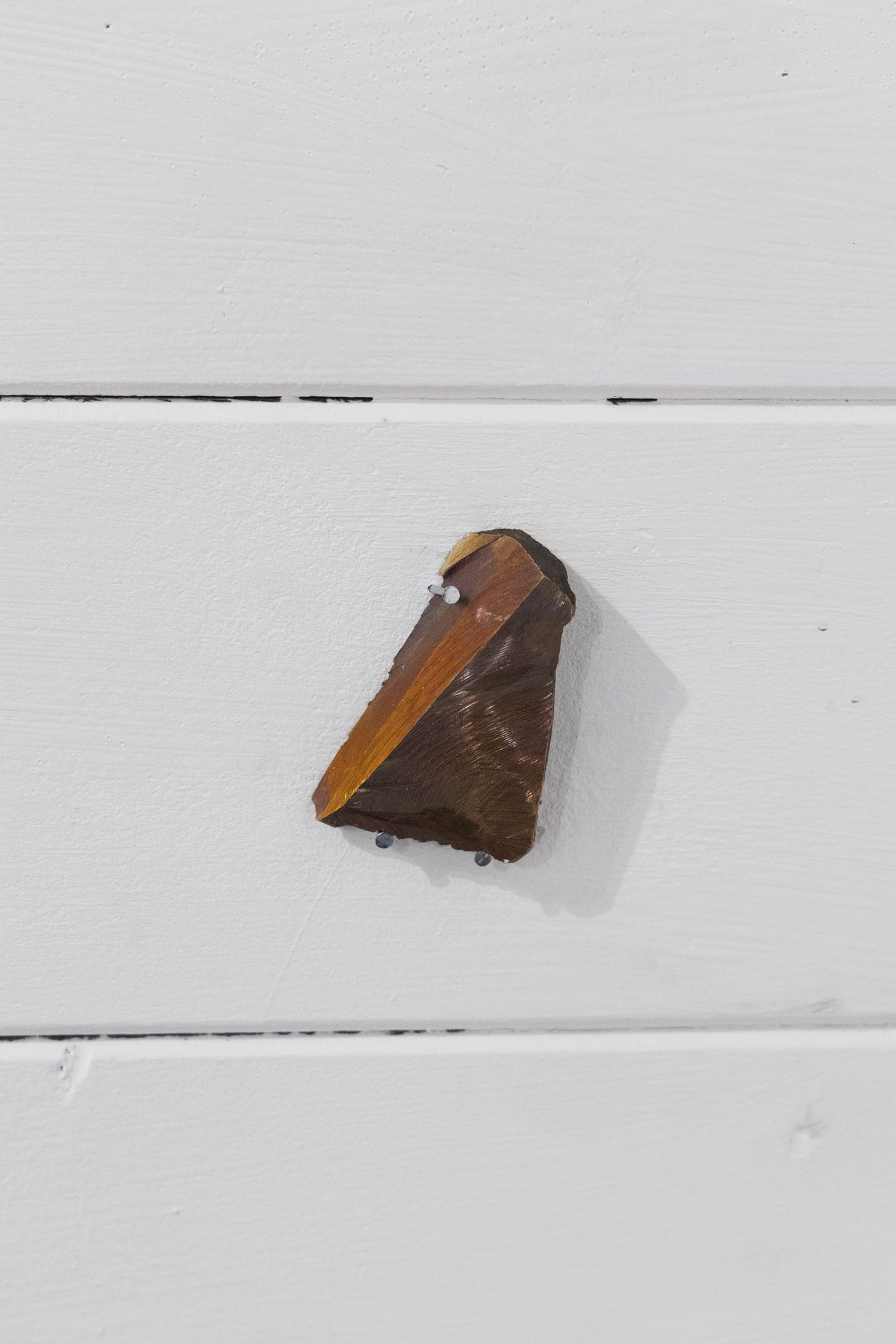
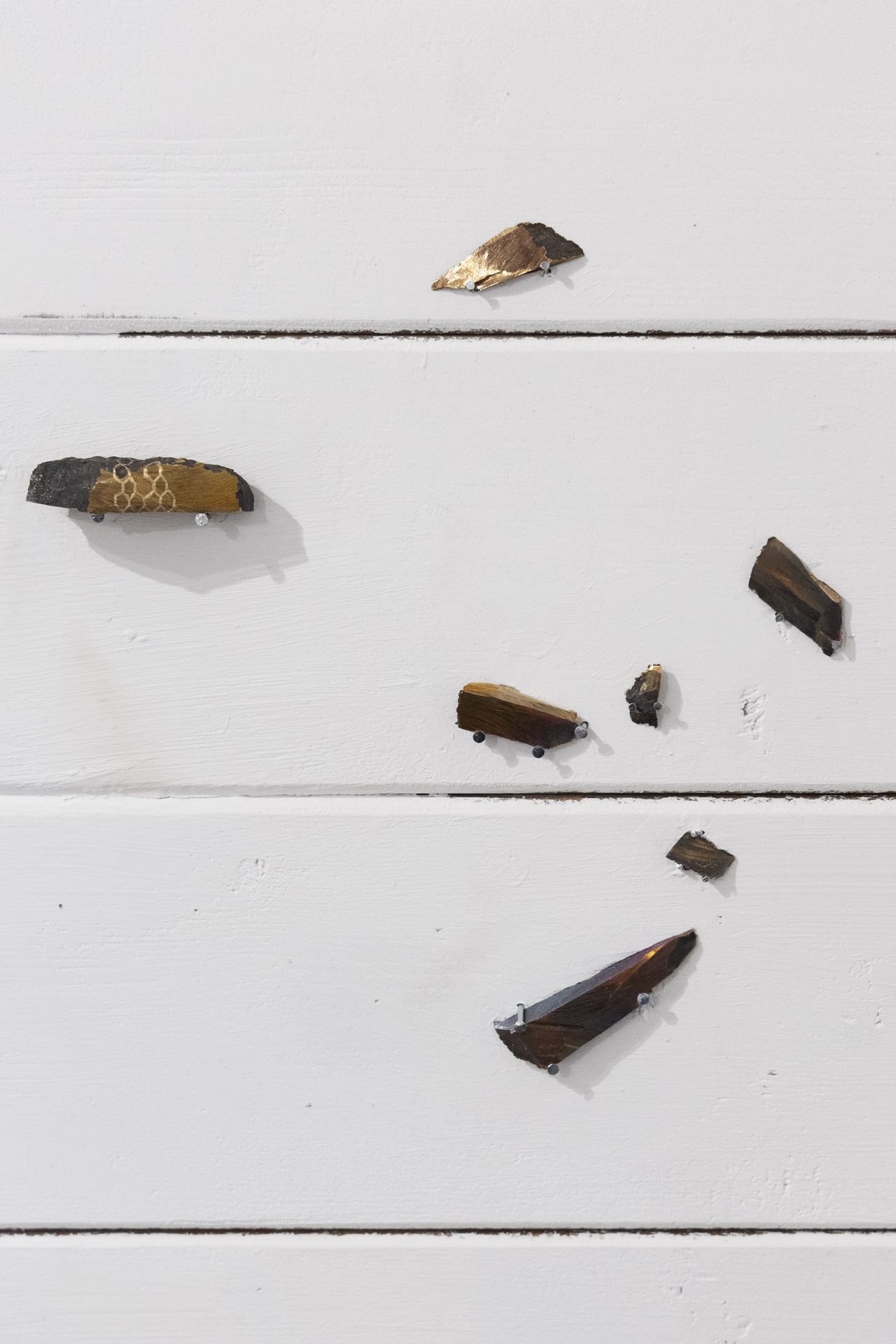
Untitled, 2025–2026
bronze debris
Photo credits: Aude Mayer
Polvere domestica explores the coexistence between species within domestic spaces, through organic materials and metal structures.
Drawing on elements collected and used in everyday environments, the project examines the forms of attention, interaction, and responsibility that connect humans and other animals.
Dust becomes a medium for reflecting on these relationships: an ambivalent presence, both visible and diffuse, that settles in layers and echoes shared memories.
Polvere domestica
(Domestic dust)
2026
Espace Annex, Biel/Bienne
—
Untitled, 2025–2026
dog hair (Daisy), wood and asphalt
Untitled, 2026
metal mesh and chains
Untitled, 2025–2026
bronze debris
Photo credits: Aude Mayer
Polvere domestica explores the coexistence between species within domestic spaces, through organic materials and metal structures.
Drawing on elements collected and used in everyday environments, the project examines the forms of attention, interaction, and responsibility that connect humans and other animals.
Dust becomes a medium for reflecting on these relationships: an ambivalent presence, both visible and diffuse, that settles in layers and echoes shared memories.
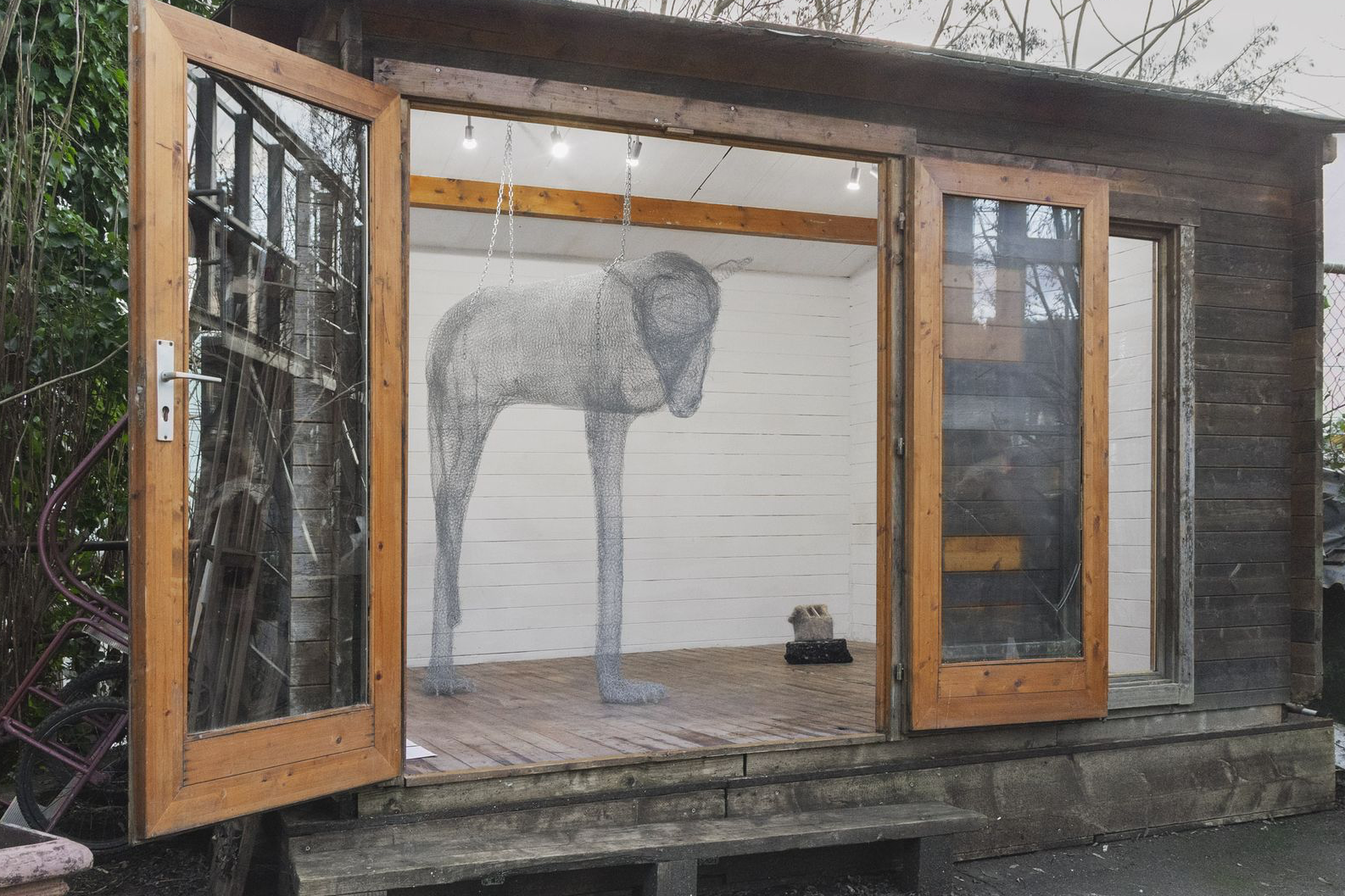
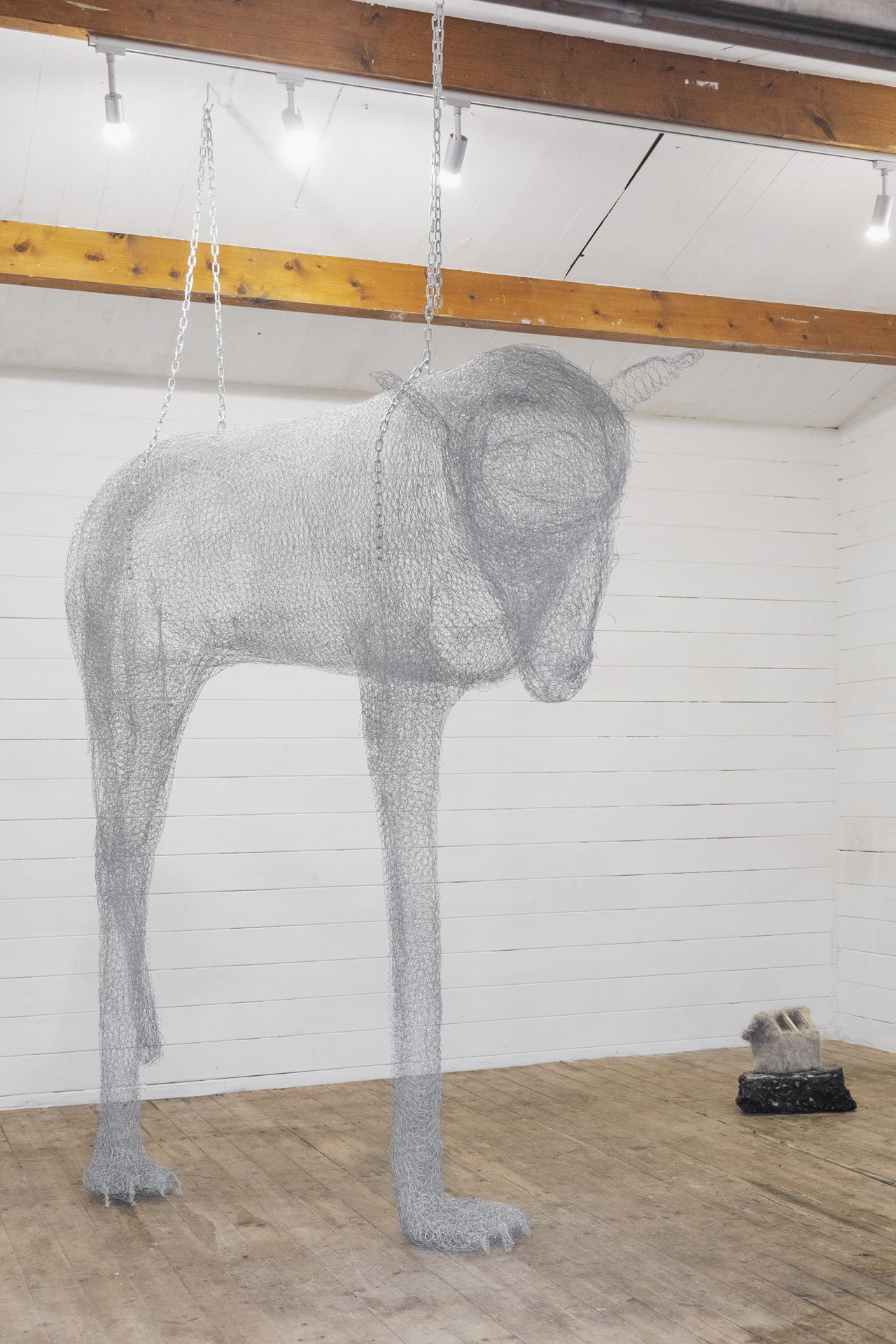
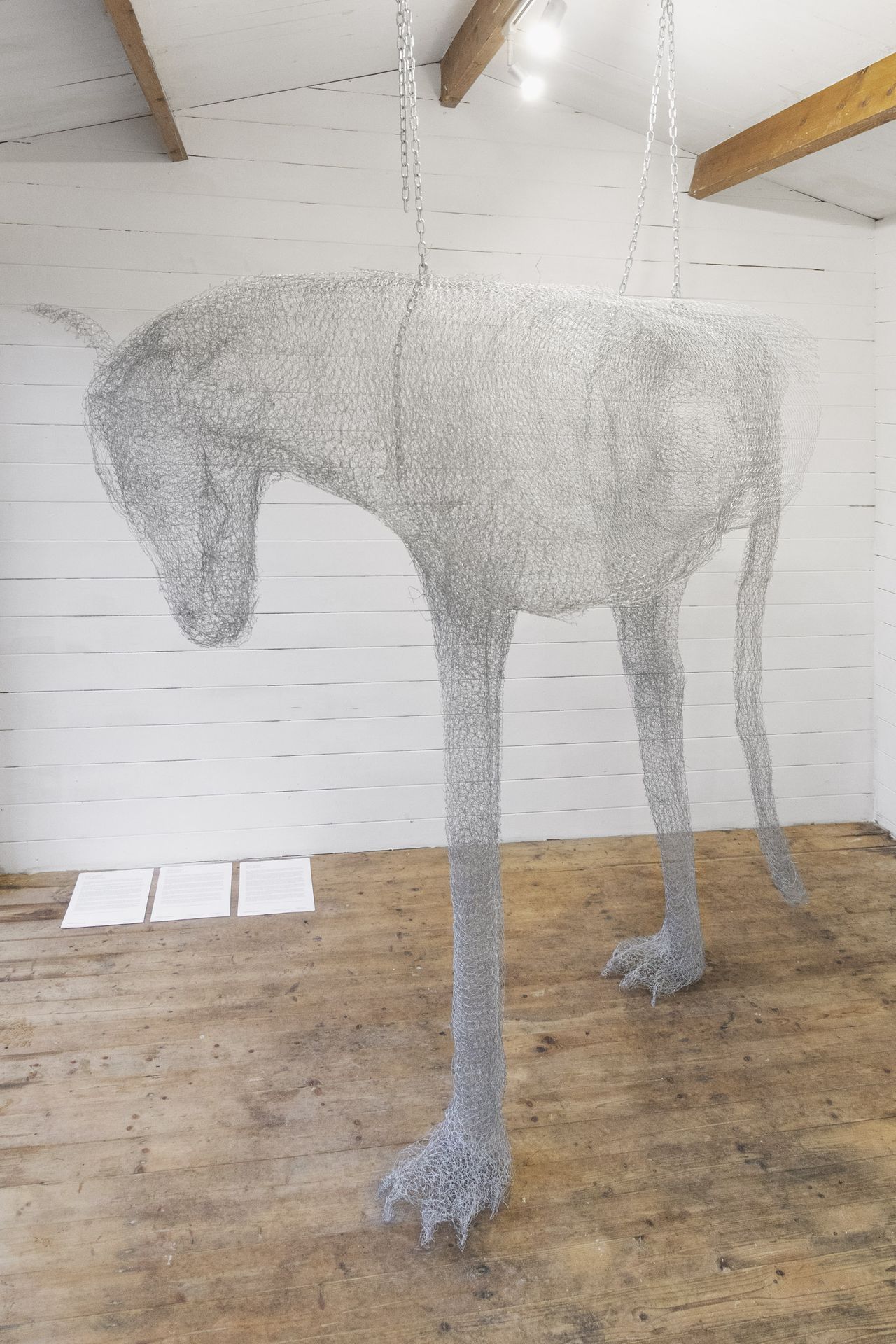
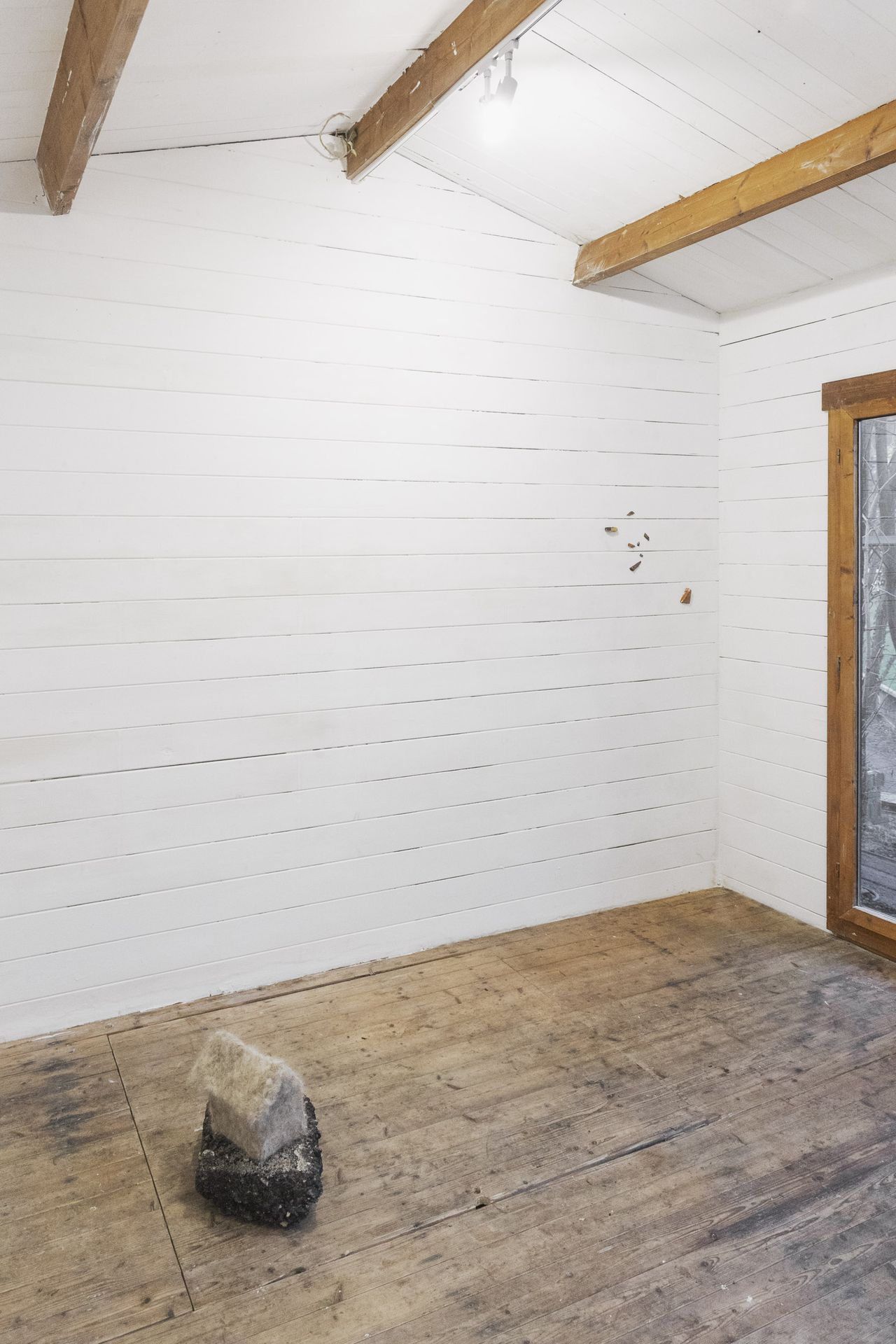
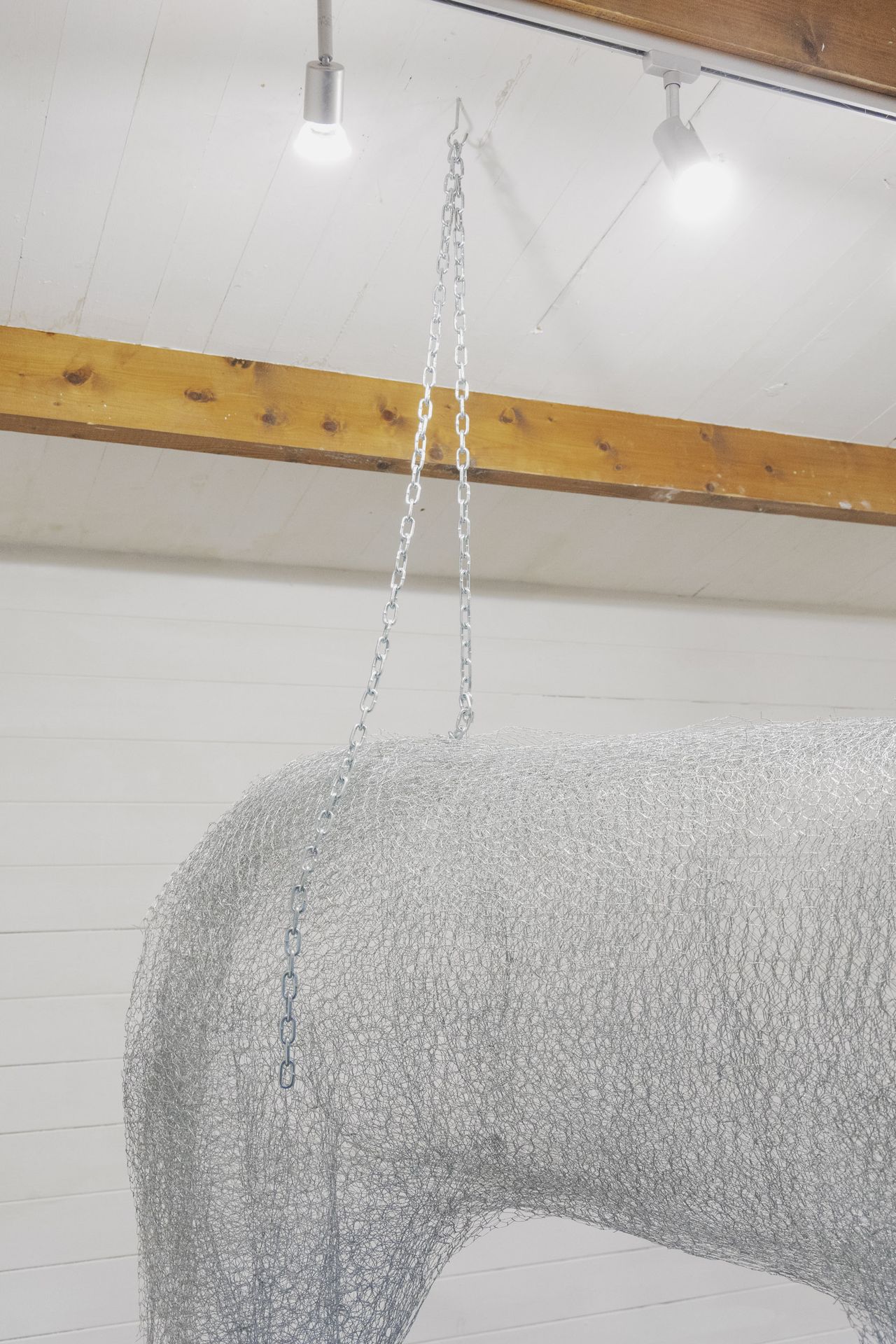
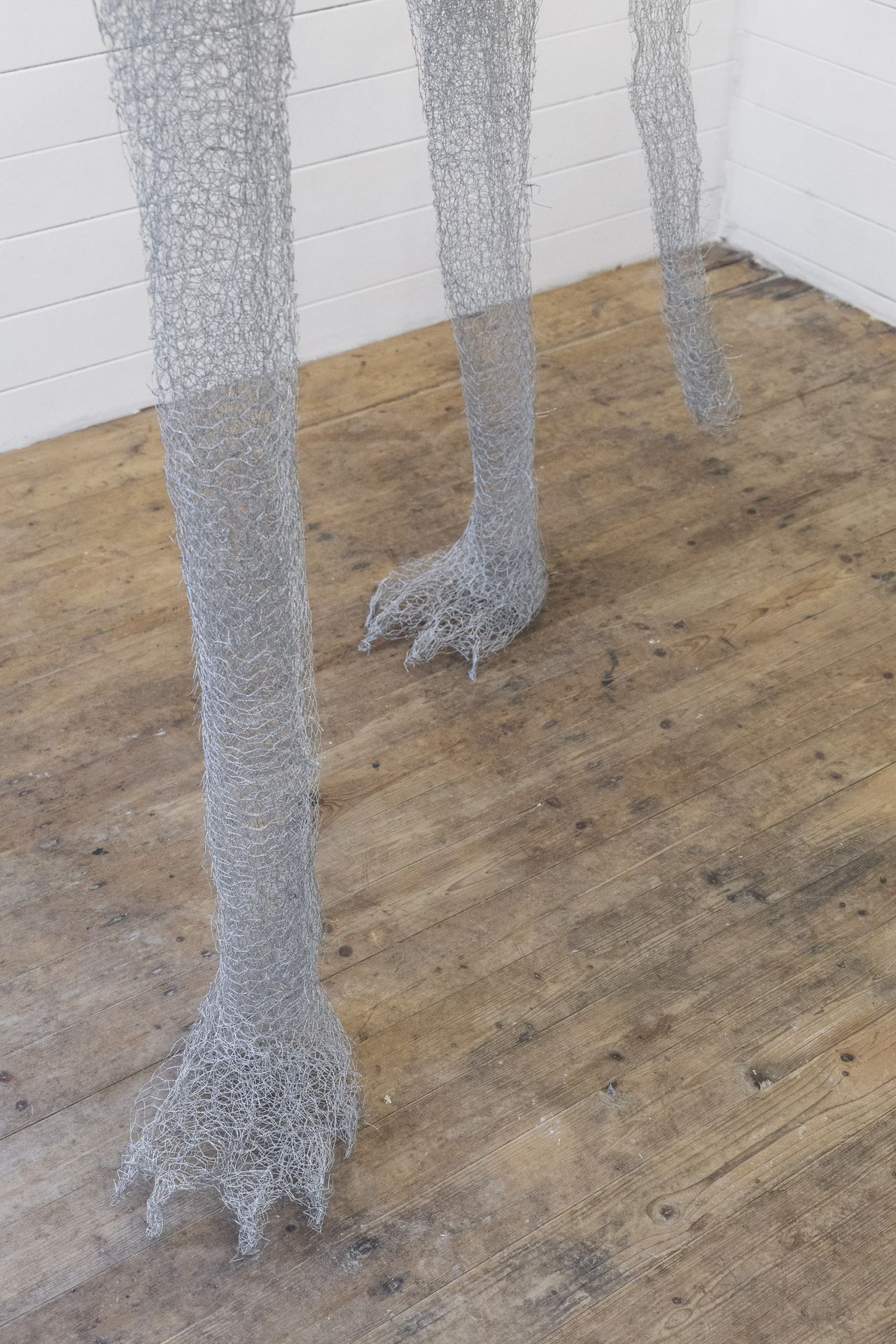
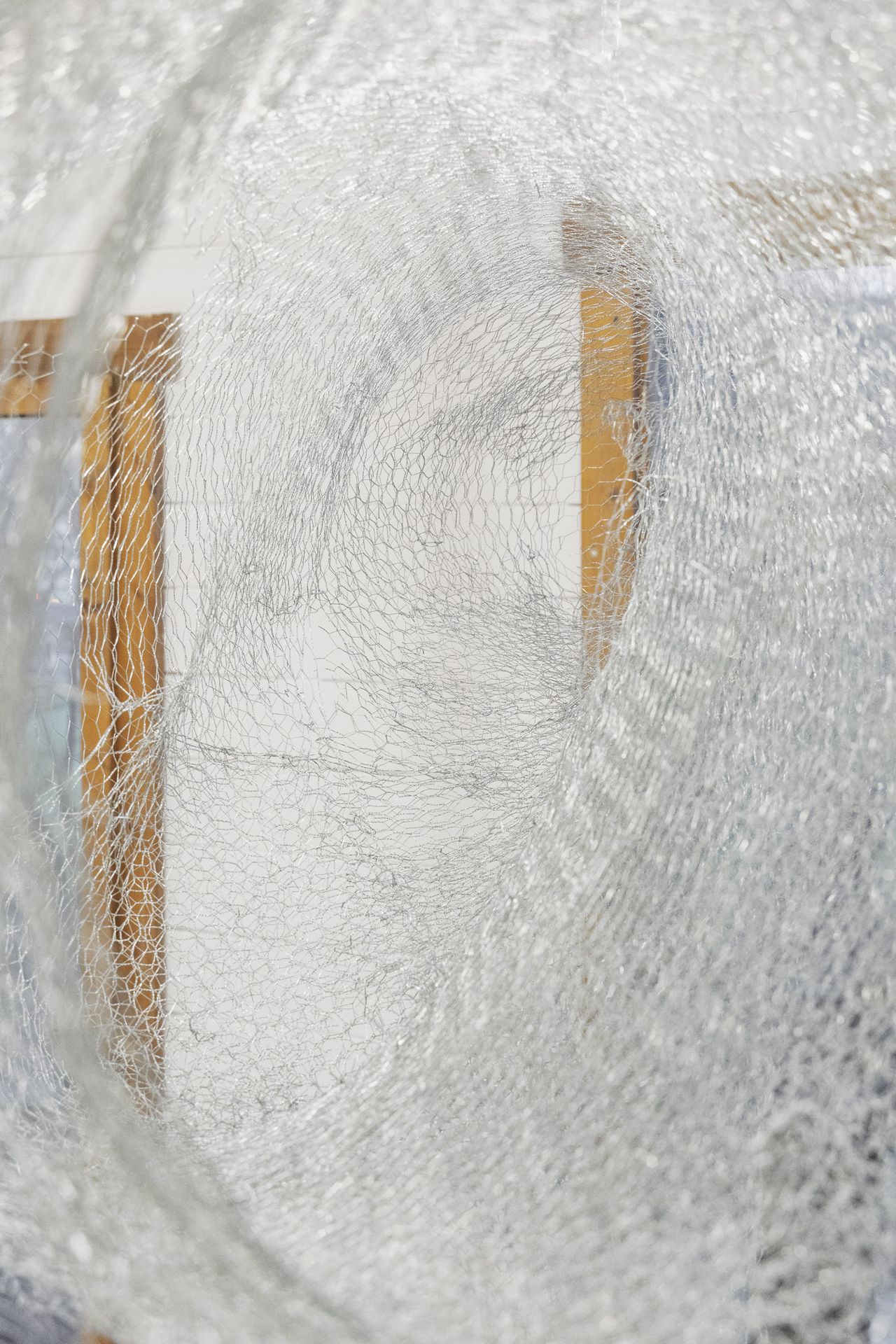
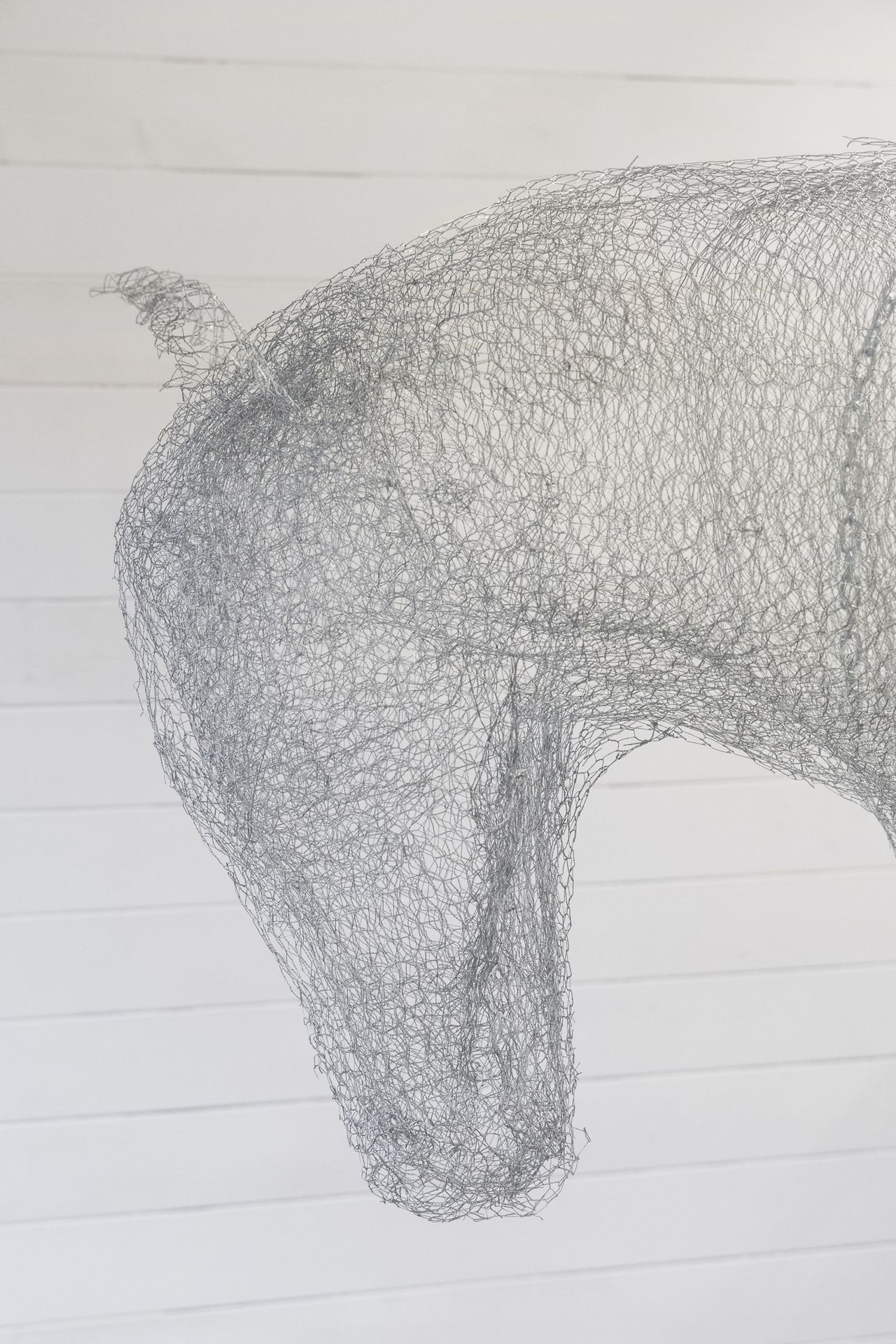
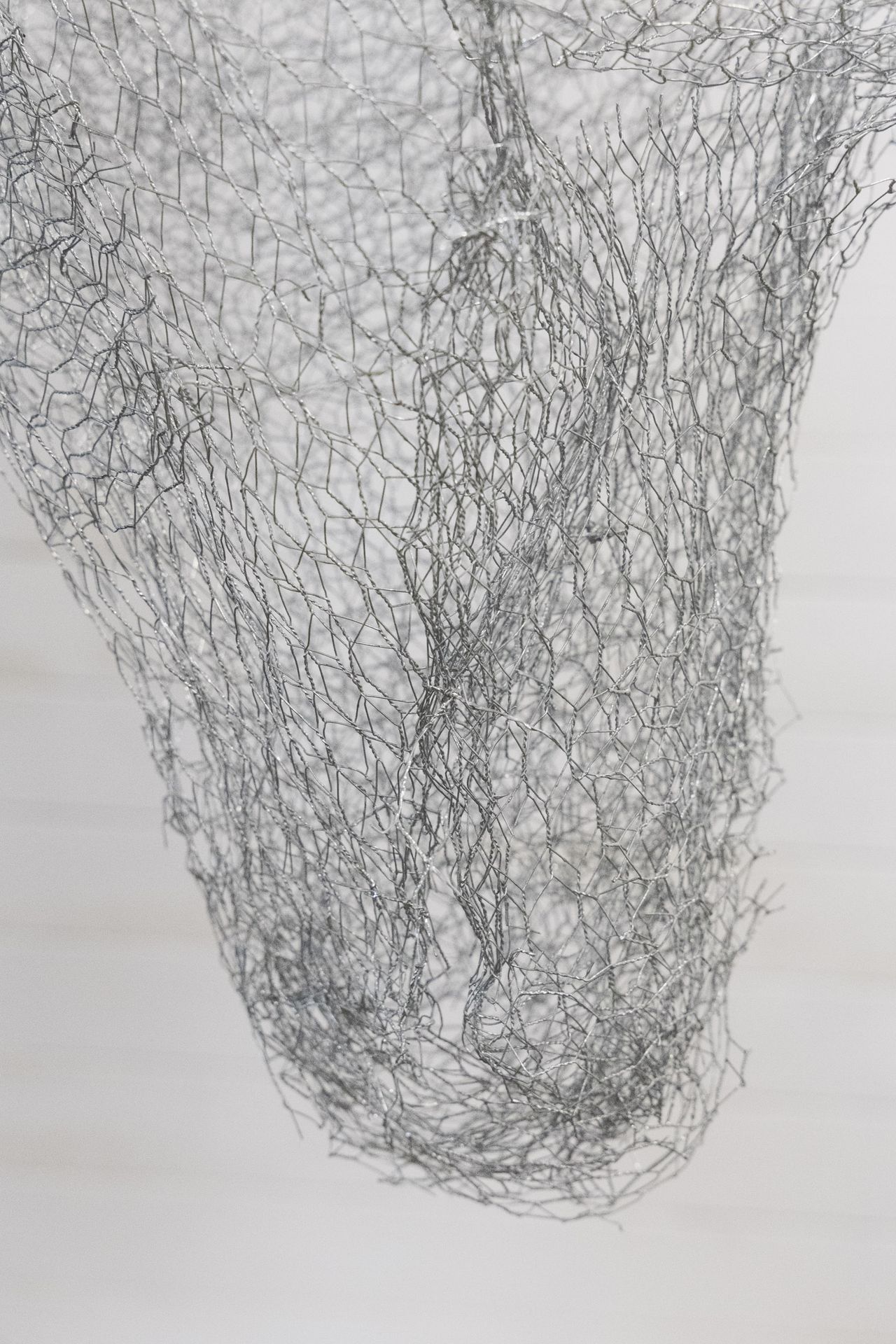
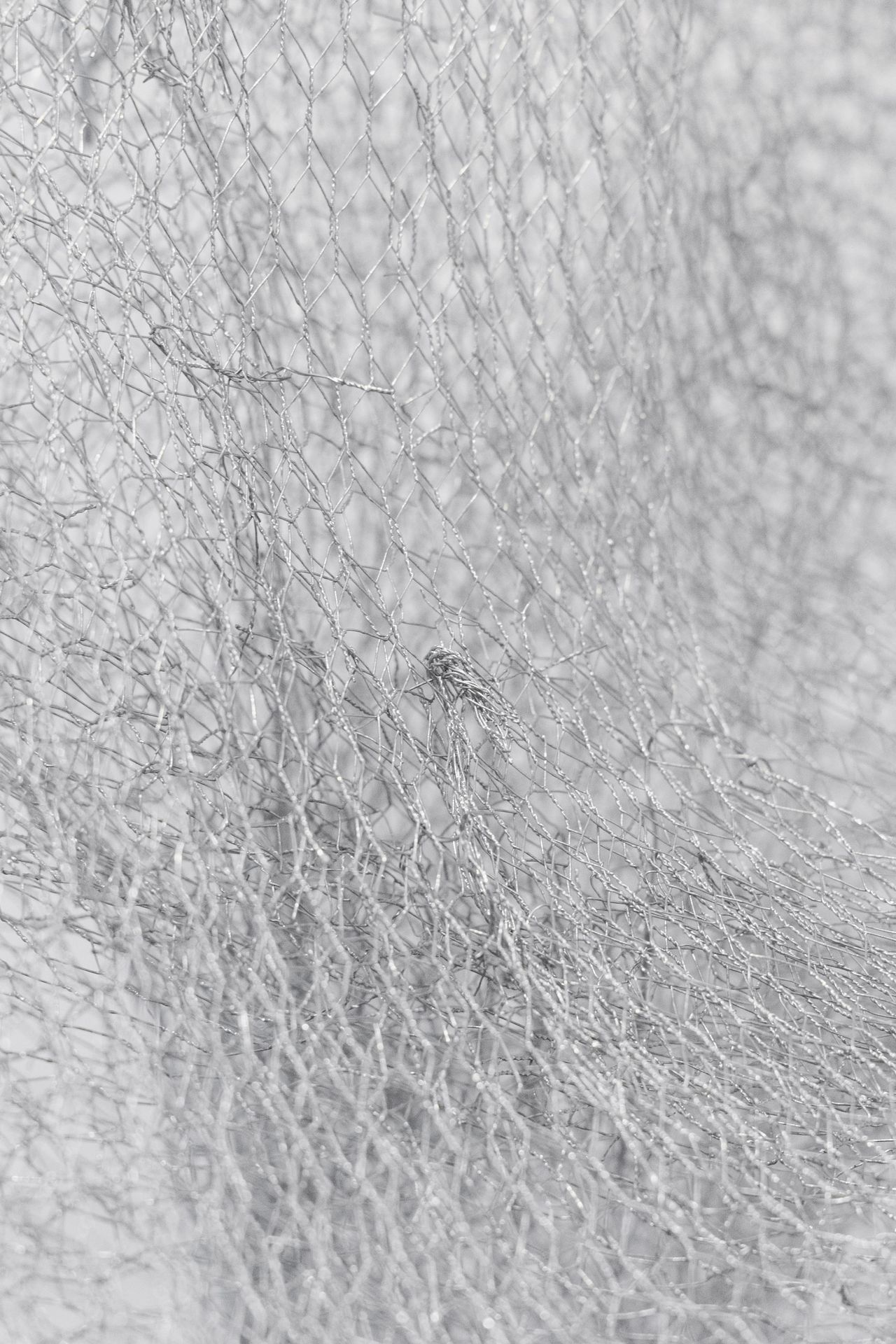
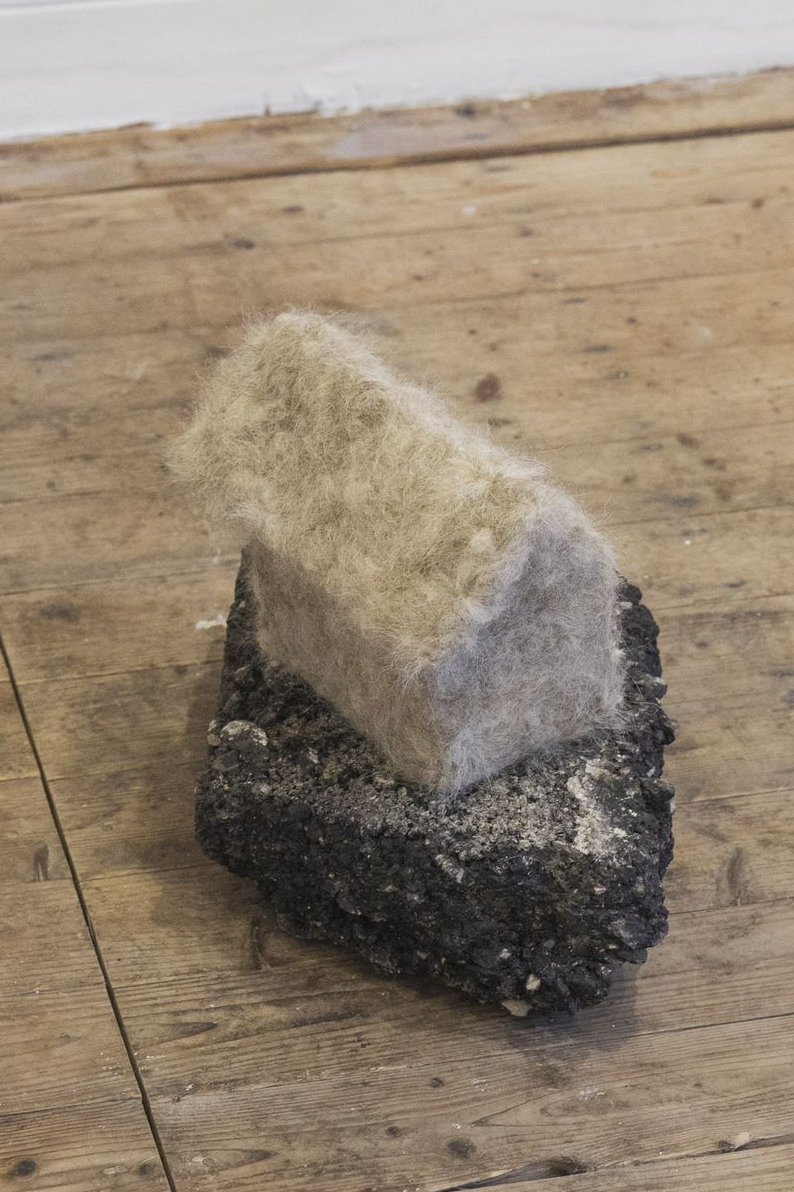
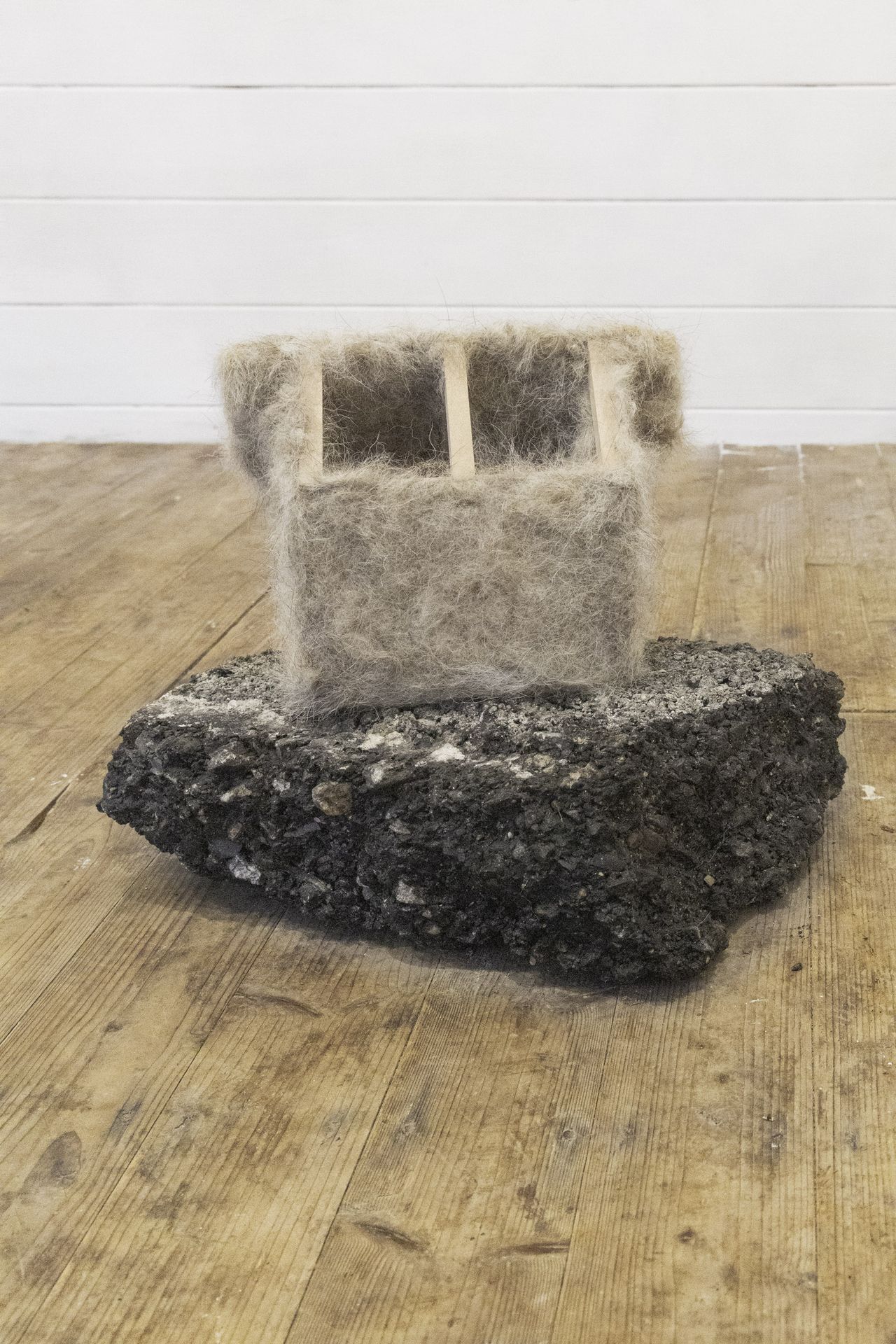
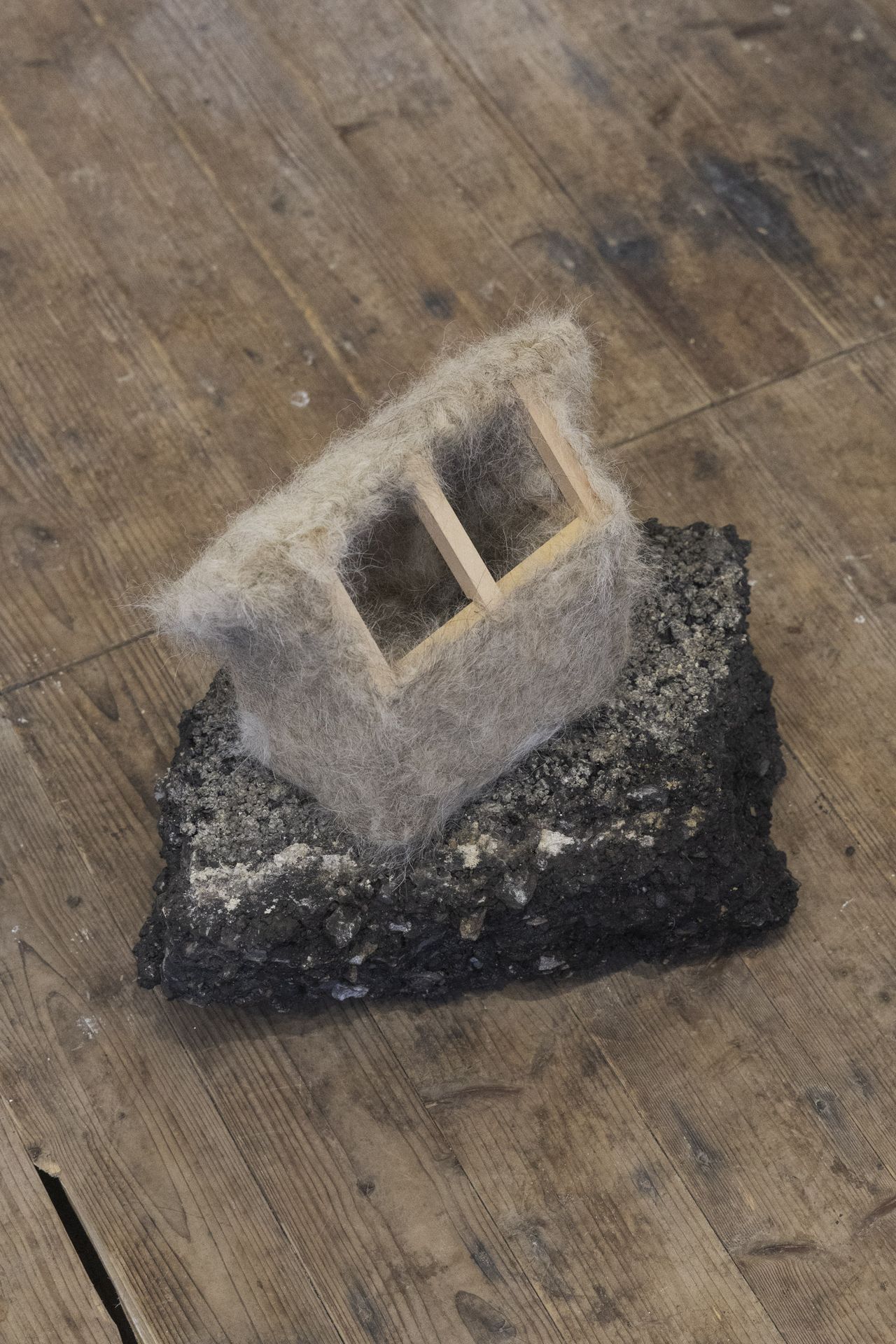
Daisy odora di casa consists of three interconnected sculptures, each created with a different technique but conceived as a unified whole. They reflect on the complex relationship between humans, dogs, and the idea of home. Home is not just a physical space but an emotional state shaped by touch, distance, scent, and connection. The sculptures explore the balance between presence and absence. Missing elements such as a human head, voids in the dog's body, or absent legs are not simply losses. They are meant to be imagined and found in another sculpture, creating a silent dialogue. This interplay expresses care, vulnerability, and interdependence. The third sculpture is a small house made from the fur of Daisy, my dog companion. The fur was collected during intimate moments of brushing her. Its nest-like texture and lingering scent evoke warmth and comfort. Yet the house is too small to offer physical shelter, underscoring the tenderness and limitations within species cohabitation.