Della serie
L'epoca d'oro delle api è terminata
2019
Reproduction
Partially burned honeycomb, dried pollen, yellow powder paint, resin and vaseline
117 × 19 × 5 cm
Della serie
L'epoca d'oro delle api è terminata
2019
Reproduction
Partially burned honeycomb, dried pollen, yellow powder paint, resin and vaseline
117 × 19 × 5 cm
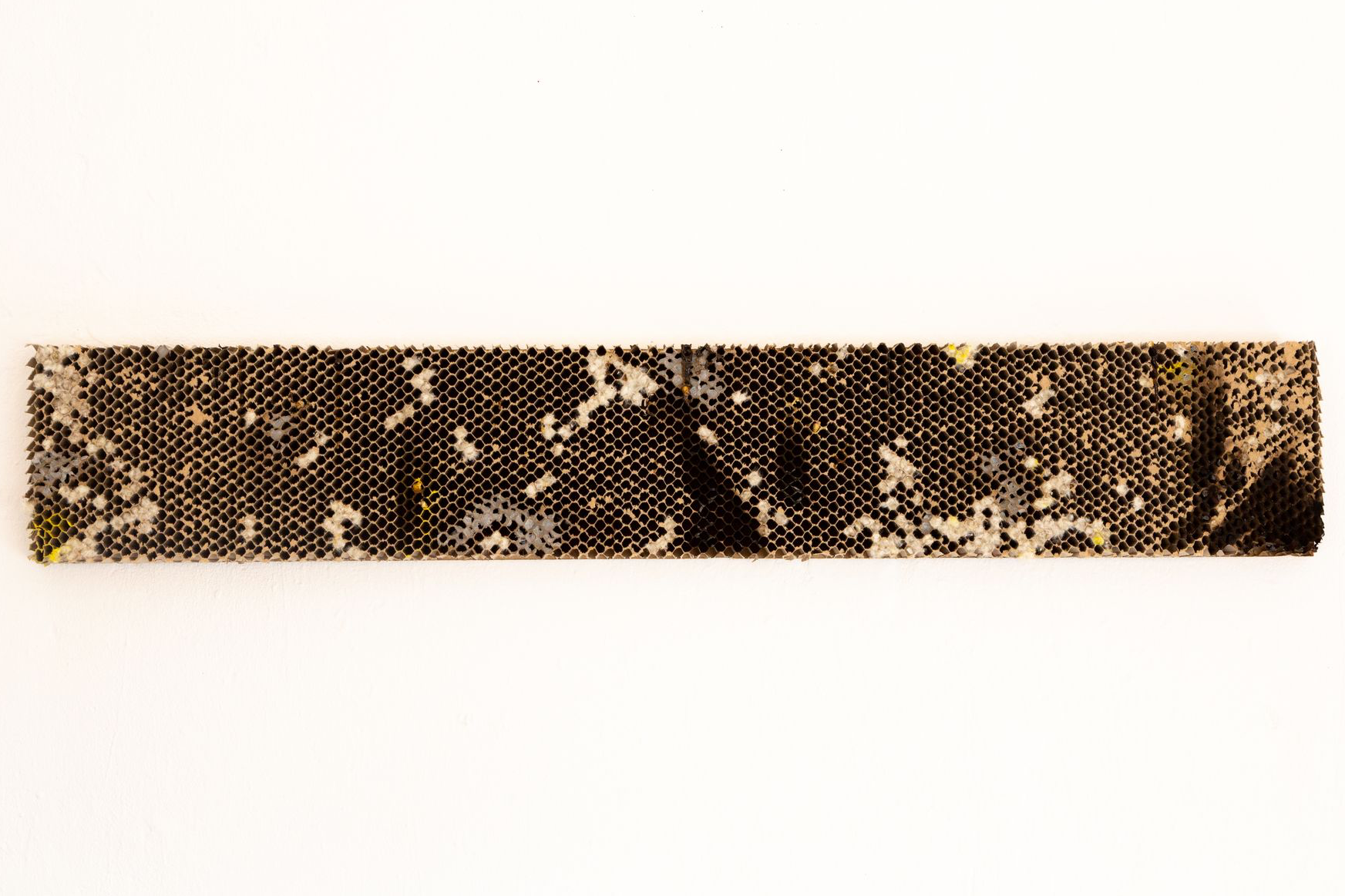
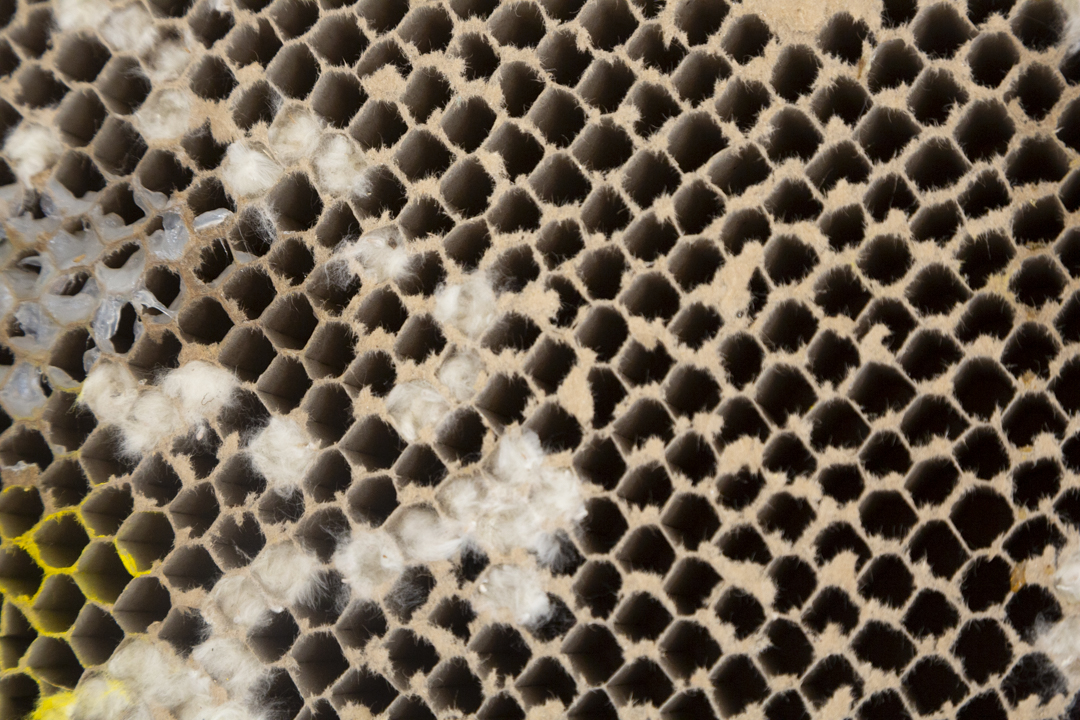
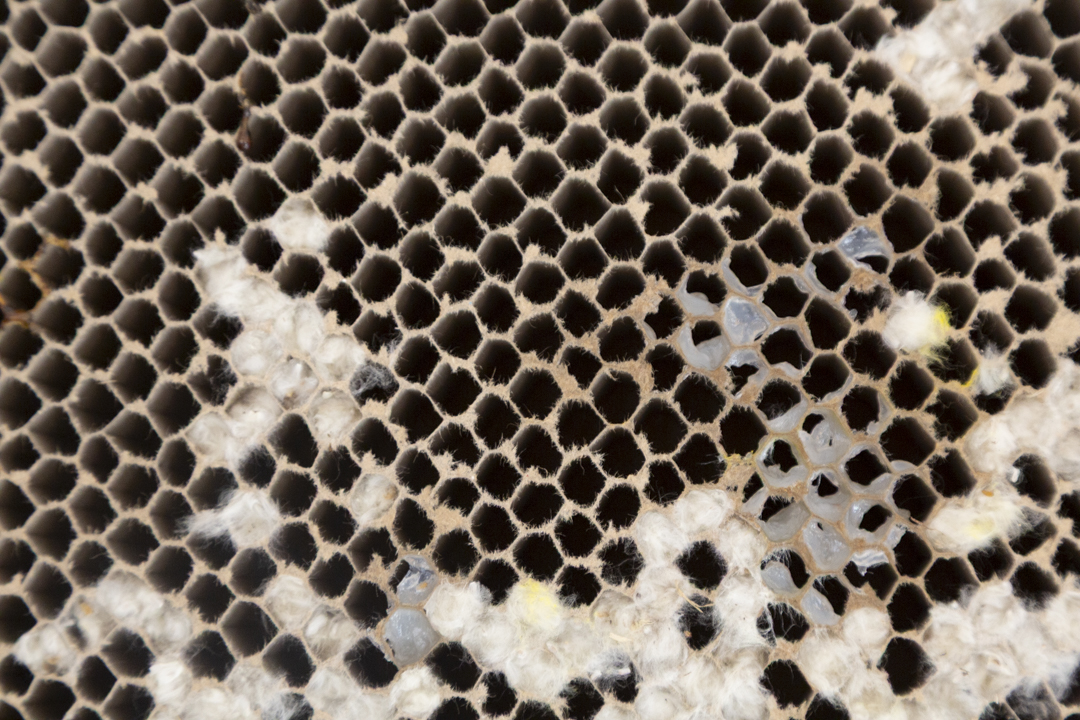
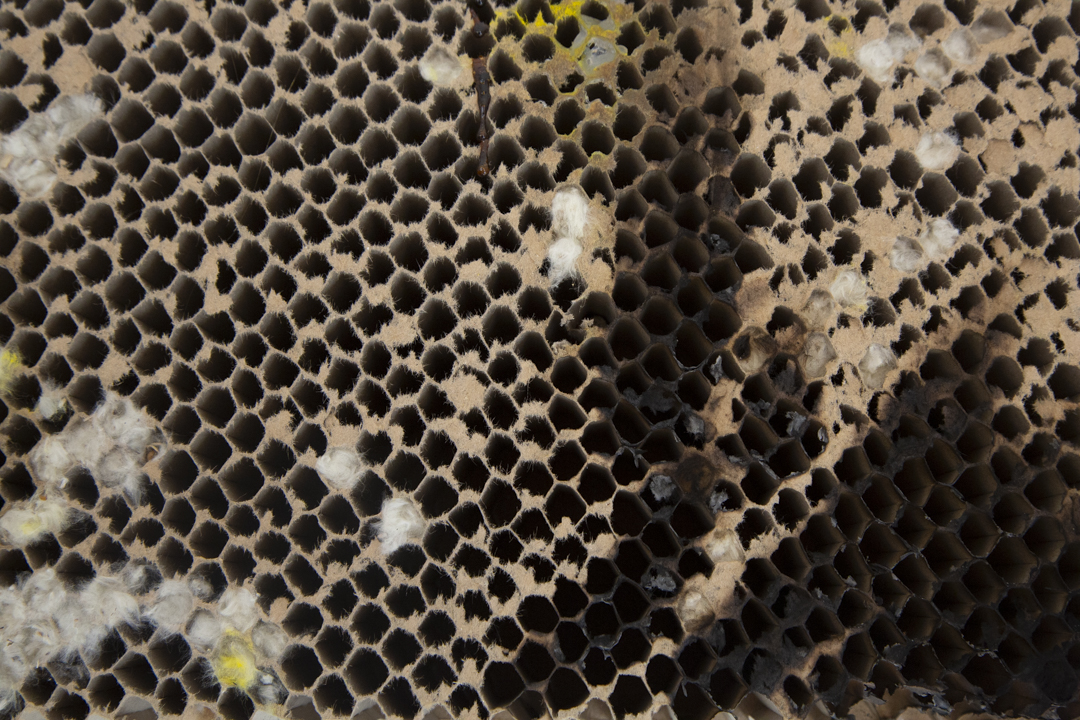
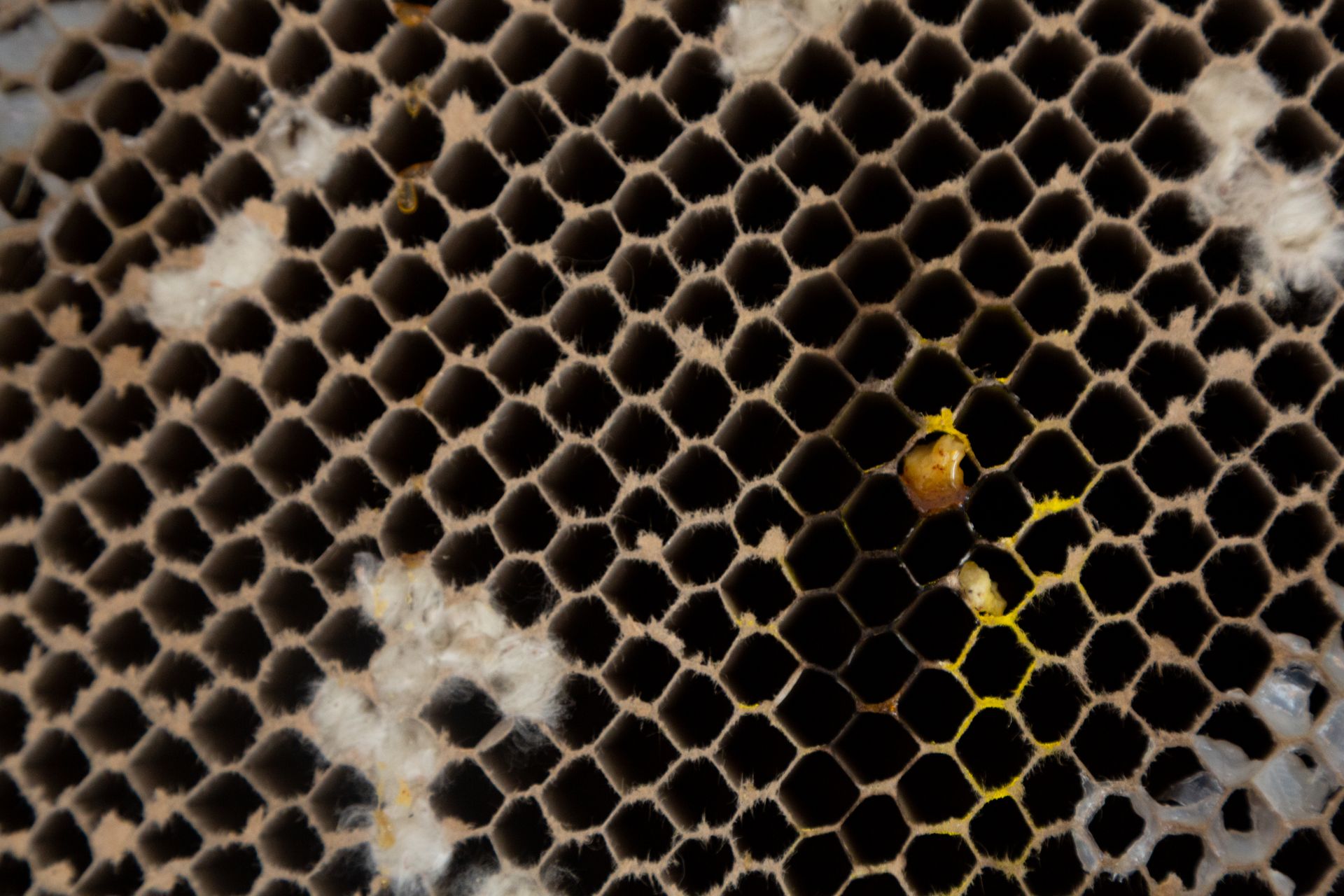
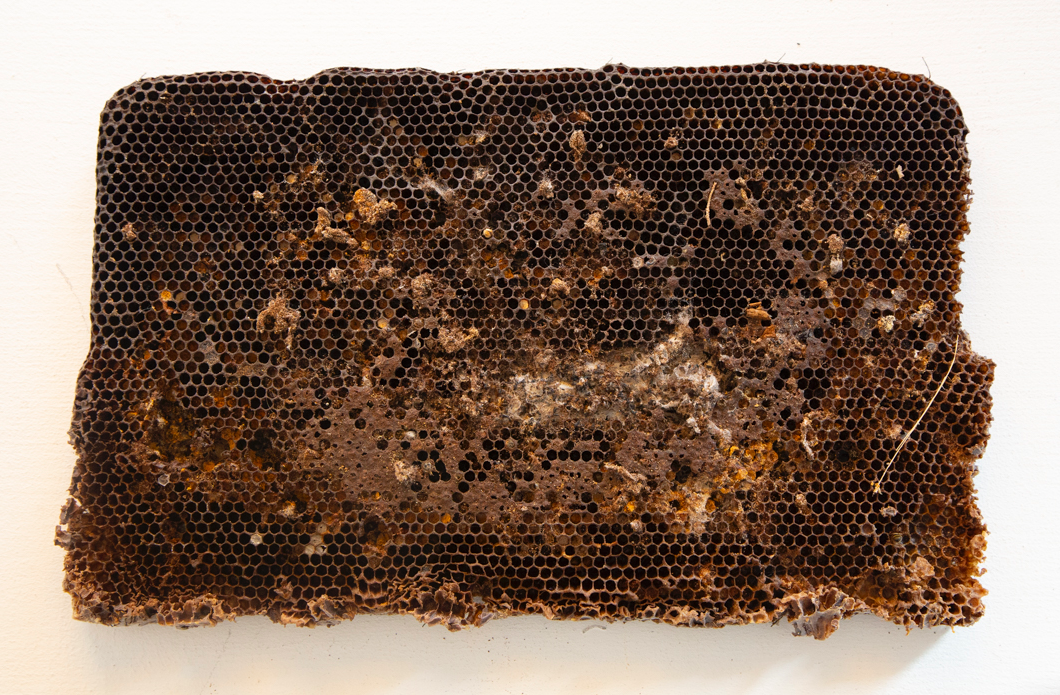
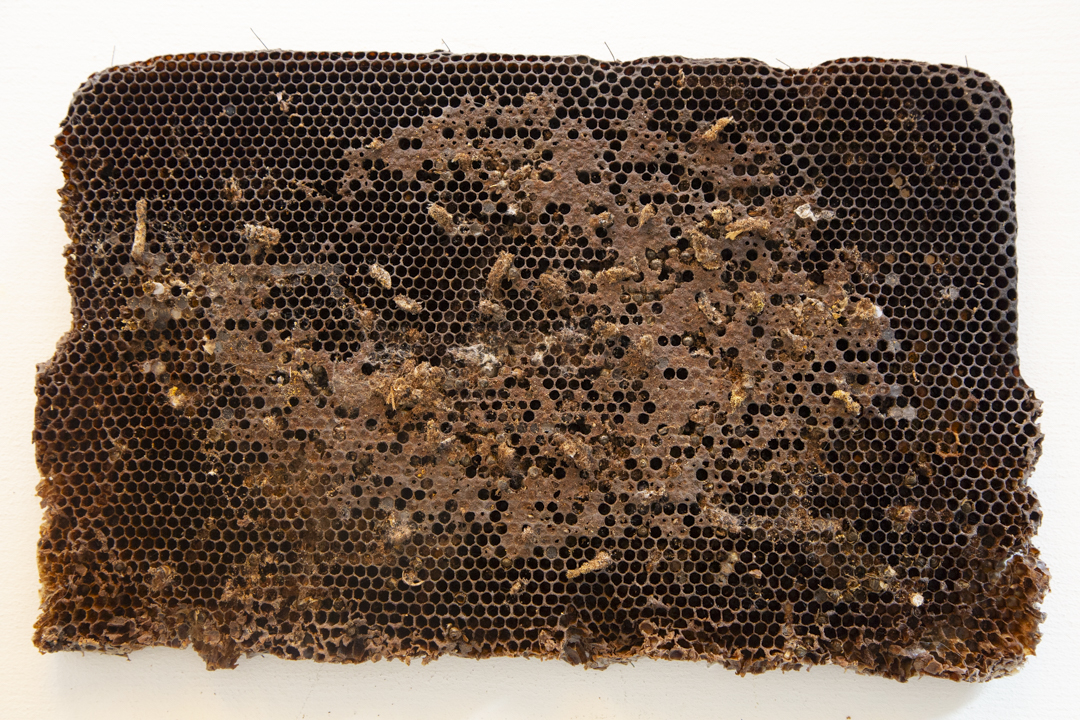
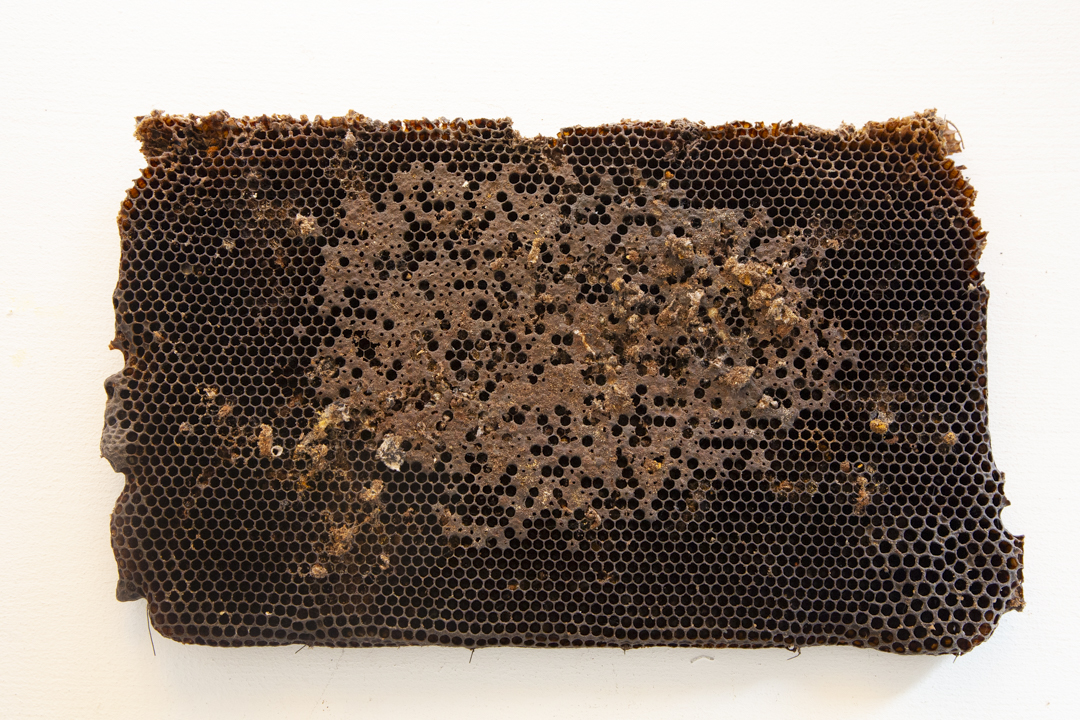
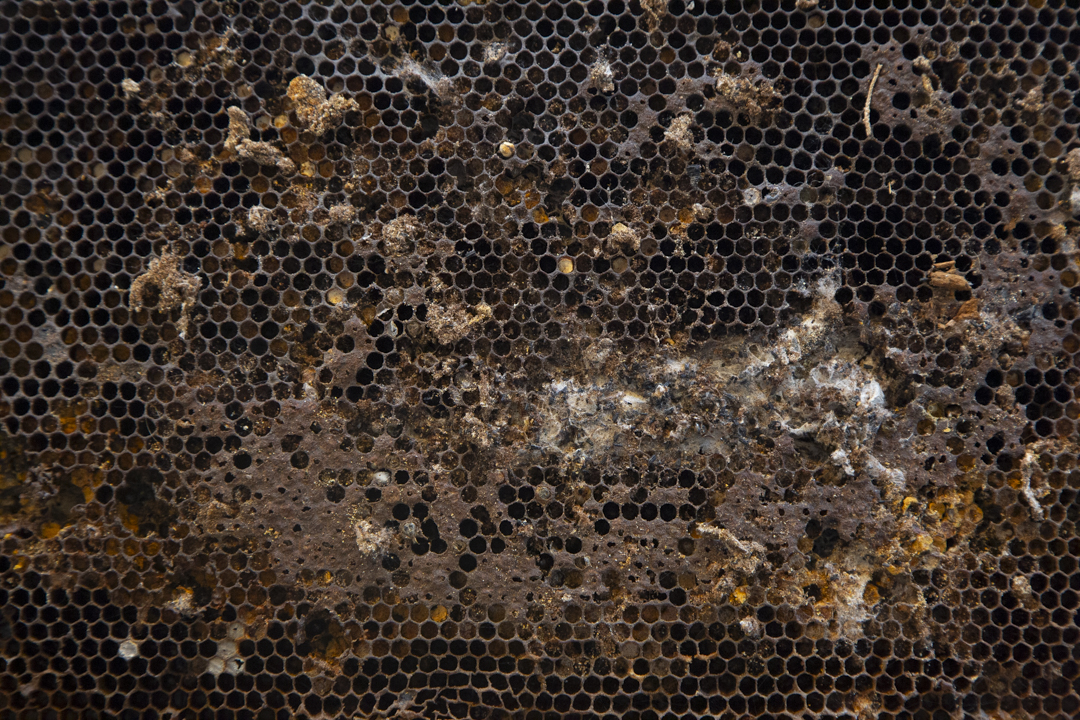
L'epoca d'oro delle api è terminata is a reproduction of what I was able to observe and study. The structure of the work is inspired by cloths recovered from inside beehives abandoned at the end of the honey harvest season. These fragments bear the marks of the bees’ former labor; however, what struck me most was seeing how new life had already begun to inhabit these emptied spaces. Small spiders, insect larvae, and other organisms had started to occupy what was once a highly organized system. This transformation, like an abandoned house becoming a home for others, shaped my approach. The diversity of materials and textures in the work reflects this layered process; a shift from one form of life to many, from a unified purpose to spontaneous adaptation. The title also alludes to the broader crisis bees are currently facing, increasingly exploited and displaced by human practices, their decline signals an imbalance in the natural order. Rather than mourning the end of a cycle, the installation captures what follows; not absence, but quiet continuation; not decay, but transition.
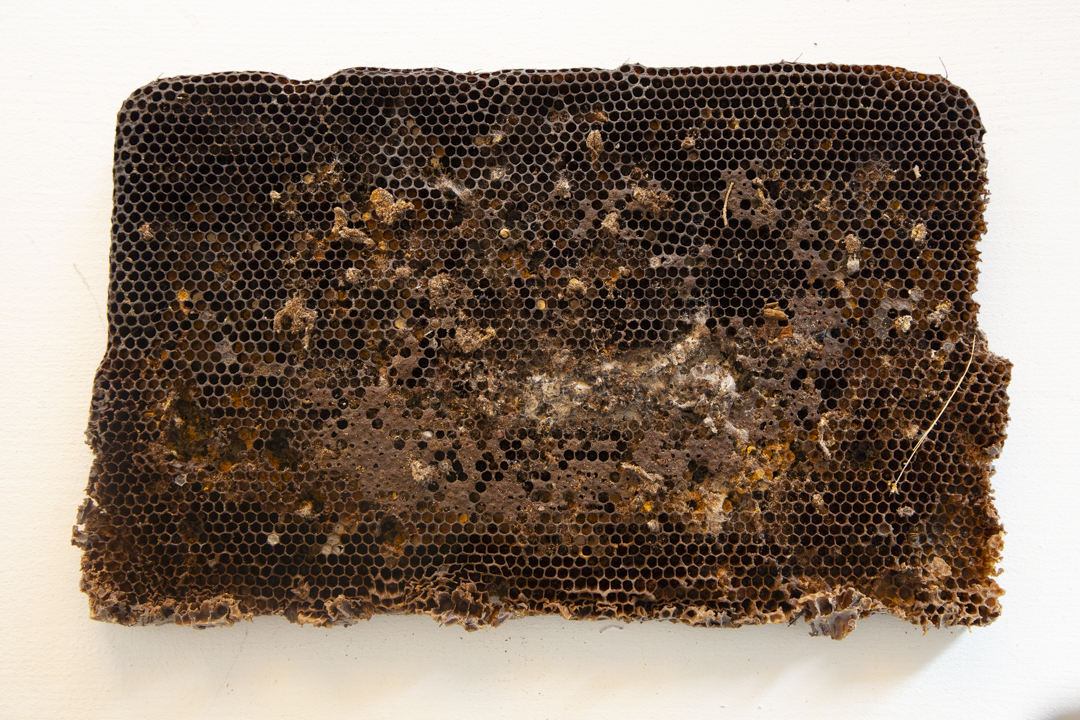
L'epoca d'oro delle api è terminata is a reproduction of what I was able to observe and study. The structure of the work is inspired by cloths recovered from inside beehives abandoned at the end of the honey harvest season. These fragments bear the marks of the bees’ former labor; however, what struck me most was seeing how new life had already begun to inhabit these emptied spaces. Small spiders, insect larvae, and other organisms had started to occupy what was once a highly organized system. This transformation, like an abandoned house becoming a home for others, shaped my approach. The diversity of materials and textures in the work reflects this layered process; a shift from one form of life to many, from a unified purpose to spontaneous adaptation. The title also alludes to the broader crisis bees are currently facing, increasingly exploited and displaced by human practices, their decline signals an imbalance in the natural order.Rather than mourning the end of a cycle, the installation captures what follows; not absence, but quiet continuation; not decay, but transition.